Saturday, May 25th    
TryVeg.com

Dunkin Cruelty

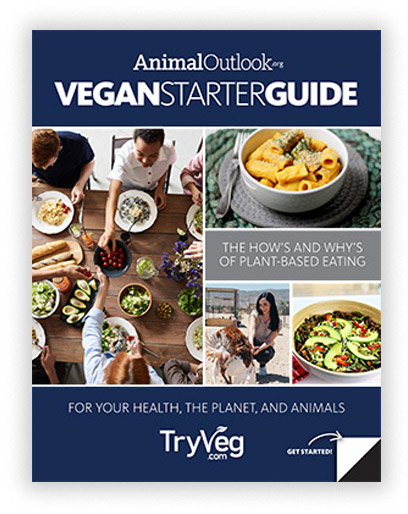
What if we were served a side of truth? Click here for your free vegetarian starter guide.

Get COK’s free enewsletter

    WELCOME TO THE WHYS & HOWS OF VEGETARIAN EATING    en Español   
    Wasting Resources

Millions of acres of forests have been clear-cut to provide grazing land for cattle.

Clear-cutting land takes a heavy toll on the earth’s sustainability.

It takes more land, water, and energy to produce meat than to grow vegetarian foods. It’s several times more efficient to eat grains directly than to funnel them through farmed animals. According to the Audubon Society, roughly 70 percent of the grain grown and 50 percent of the water consumed in the United States are used by the meat industry.(1) A Minority Staff of Senate Committee on Agriculture, Nutrition & Forestry report states the beef in just one Big Mac represents enough wheat to make five loaves of bread.(2)

“[T]he costs of mass-producing cattle, poultry, pigs, sheep and fish to feed our growing population…include hugely inefficient use of freshwater and land, heavy pollution from livestock feces, rising rates of heart disease and other degenerative illnesses, and spreading destruction of the forests on which much of our planet’s life depends.”
— TIME. Visions of the 21st Century, “Will We Still Eat Meat?”

References

  1. Resolutions for a New Millennium, Audubon News, Jan. 1, 2000.
  2. Animal Waste Pollution in America: An Emerging National Problem, Minority Staff of Senate Committee on Agriculture, Nutrition & Forestry, 104th Congress, Dec. 1997.
    P.O. BOX 9773, WASHINGTON, DC 20016 | 301-891-2458 | info@cok.net