Tuesday, May 21st    
TryVeg.com

Dunkin Cruelty

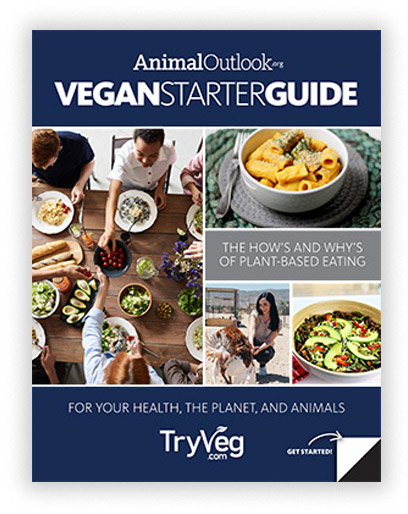
What if we were served a side of truth? Click here for your free vegetarian starter guide.

Get COK’s free enewsletter

    WELCOME TO THE WHYS & HOWS OF VEGETARIAN EATING    en Español   
    The Benefits of Vegetarian Eating
"Vegetarians have the best diet. They have the lowest rates of coronary disease of any group in the country...a fraction of our heart attack rate and they have only 40 percent of our cancer rate."
—William Castelli, M.D., Director, Framingham Heart Study, the longest-running epidemiological study in medical history

Beating Heart Disease

In the typical American diet, animal products are the main source of saturated fat and the only source of cholesterol. By avoiding meat, eggs, and dairy, we can greatly reduce the amount of saturated fat and all the cholesterol that contribute to heart disease. In one study, a low-fat, high-fiber, near-vegan diet combined with stress reduction techniques, smoking cessation, and exercise actually reversed atherosclerosis, the hardening of the arteries.(1)

Preventing Cancer

Breast cancer rates are dramatically lower in countries that follow plant-based diets; but, when those same populations include more animal products in their diets, cancer rates increase. Typically, vegetarians have lower rates of colon cancer than non-vegetarians,(2) and a recent study found that a low-fat, vegetarian diet with routine exercise can help stop and even reverse prostate cancer.(3)

Avoiding Obesity

Obesity is an epidemic in the United States. A low-fat, vegetarian diet with moderate exercise can take off—and keep off—the weight. See Eat More, Weigh Less, by Dean Ornish, M.D.

Strengthening Immunity

Up to 80 percent of all factory-farmed animals receive antibiotics to promote growth and minimize illnesses common in intensive confinement animal agribusiness practices.(4,5)

As a result, antibiotic-resistant bacteria strains, such as salmonella, campylobacter, and E.coli, are increasingly found in animal products. The ability of antibiotics to treat human infections has been jeopardized. The World Health Organization, the American Medical Association, and other health advocates are calling for the reduction or termination of this antibiotics use.(6,7)

References

  1. Ornish D, et al. Can lifestyle changes reverse coronary heart disease? Lancet 1990;336:129-33.
  2. Phillips RL. Role of lifestyle and dietary habits in risk of cancer among Seventh-Day Adventists. Cancer Res (Suppl) 1975;35:3513-22.
  3. Ornish D, et al. Dietary trial in prostate cancer: early experience and implications for clinical trial design. Urology 2001;57(4 Suppl 1):200-1.
  4. Proposed CAFO Preamble and Rule, U.S. EPA, www.epa.gov/npdes/pubs/cafo_ch5.pdf.
  5. Literature Review and Assessment of Pathogens, Heavy Metal, and Antibiotic Content of Waste and Wastewater Generated by CAFOs, U.S. Environmental Protection Agency contract 68-C-99-263.
  6. Antibiotic Use in Food-Producing Animals Must Be Curtailed to Prevent Increased Resistance in Humans, World Health Organization, Press release WHO/73, Geneva, October 20, 1997.
  7. American Medical Association. House of Delegates, Resolution 508, June 2001.
    P.O. BOX 9773, WASHINGTON, DC 20016 | 301-891-2458 | info@cok.net